If you’ve ever spent time in a warehouse, a retail stock room, or a loading dock on a rainy afternoon, odds are you’ve grabbed a hand truck to move a heavy box or a stack of pallets. As someone who’s spent the last 12 years supplying hand trucks to small businesses, large distribution centers, and even local moving companies across the country, I’ve lost count of how many times customers have asked me one question: “Do these things actually maneuver well enough to do the job right?” It’s a fair question. A hand truck that’s hard to turn, hard to balance, or awkward in tight spaces isn’t just an inconvenience—it’s a safety hazard, a waste of time, and a source of unnecessary strain on your team. Today, I want to break down what makes a hand truck maneuverable, what factors you should look for when evaluating one, and why that little detail could make or break how efficient your operations are. Hand Trucks

First, let’s get one thing straight: maneuverability isn’t a one-size-fits-all term. What works for moving 50-pound boxes through a narrow apartment hallway isn’t the same as what works for hauling 500-pound pallets across a concrete warehouse floor. For the small business owner moving inventory between a back room and a sales floor, maneuverability means being able to turn 90 degrees without scraping a wall or getting stuck in a doorway. For the logistics manager, it’s being able to weave around forklifts in a busy loading dock, stop quickly when someone walks into your path, and navigate uneven pavement at a delivery site. A lot of customers I talk to mix up “weight capacity” with maneuverability, and that’s a mistake. A hand truck that can hold more weight isn’t necessarily easier to move—you have to pair capacity with design to get the right combination.
Let’s start with the single most important feature that affects maneuverability: wheel design. This is where I see the biggest difference between budget hand trucks and the ones that actually perform well for daily use. Most entry-level hand trucks come with solid rubber wheels or thin plastic tires. On smooth concrete, those work okay, but the second you get on gravel, carpet, or a slightly uneven loading dock, they’re terrible. They bounce, they wobble, and they require way more force to turn. The hand trucks my company supplies, for example, all come with pneumatic rubber wheels for jobs that involve outdoor work or uneven surfaces, and semi-pneumatic wheels for indoor use on slightly rough floors. Wait—what’s the difference between pneumatic and solid wheels, you might ask? Pneumatic wheels have air inside, like bike tires, which absorb small bumps and unevenness without adding extra weight. That means when you’re pulling a heavy load, you don’t feel every crack in the floor or every pebble under the wheel. Semi-pneumatic wheels have a foam core instead of air, so they never go flat, which is a big plus for businesses that don’t have time to fix a flat tire mid-shift. We’ve had customers switch from solid wheels to pneumatic on their main hand trucks and report that they cut their moving time by almost 20% because the wheels roll easier. Even the wheel size matters: larger wheels roll over obstacles better than small ones, so a 10-inch wheel on a standard hand truck is way more maneuverable than a 6-inch wheel on a budget model. But here’s the catch—larger wheels can make the hand truck harder to store in a small closet, so it’s a trade-off you have to make based on your space.
Next up: the turning radius. This is a term you’ll hear a lot in equipment reviews, and it’s exactly what it sounds like—the space a hand truck needs to make a full 180-degree turn. If you’ve ever tried to turn a standard hand truck in a 3-foot wide hallway, you know how frustrating it is. The front of the truck hits one wall, the back hits the other, and you have to reposition three or four times just to turn around. That’s why so many of my customers ask for hand trucks with a tight turning radius. How do manufacturers achieve that? It’s all in the frame design, and specifically the axle placement. Hand trucks with a “pivot axle” design, where the wheels can move independently of each other, have a much tighter turning radius than models where the wheels are fixed in place. For example, our line of aluminum hand trucks (which are also lighter than steel, by the way—more weight savings for your team) has a turning radius that’s almost 15% tighter than standard steel hand trucks. That means you can turn in a doorway that’s just 36 inches wide, instead of needing a 42-inch wide space. I had a customer last year who runs a small boutique with narrow hallways and tiny stock rooms; she told me switching to our pivot-axle hand trucks cut the time her staff spent moving inventory by an hour a day. That’s 5 extra hours a week they can spend helping customers instead of wrestling with a hard-to-turn hand truck.
Balance and control are two more factors that go hand in hand with maneuverability—literally. A hand truck that’s hard to balance when you’re lifting a heavy load isn’t just hard to maneuver; it’s a safety risk. When you tilt a hand truck to lift a load, the center of gravity shifts, and if the truck isn’t designed to keep that center low, you’ll struggle to keep it steady. A lot of budget hand trucks have a high center of gravity because their frame is made of thick steel, or their handle is too far back. Our hand trucks have a reinforced, low-profile frame that keeps the center of gravity close to the wheels, so even when you’re lifting a 400-pound load, the truck stays stable. That stability translates to better maneuverability because you don’t have to fight to keep the truck from tipping over every time you turn or stop. We also use ergonomic handles with non-slip grips, and some of our models have adjustable handles so you can set it to the height of the person operating it. A hand truck that’s too tall or too short for the person using it will feel unbalanced, no matter how good its frame is. I’ve seen this firsthand: a warehouse worker who’s 6’2” will have a completely different experience with a hand truck than a worker who’s 5’4”, even if they’re both moving the same load. Adjustability eliminates that problem, making the truck maneuverable for anyone on your team.
Now, let’s talk about a common misconception: foldable hand trucks are just as maneuverable as standard ones. A lot of small business owners love foldable hand trucks because they save storage space, and to be clear, they are great for that. But when it comes to maneuverability, most foldable models fall short. Their frames are lighter, so they flex a little when you put a heavy load on them, which makes them harder to control. Their turning radius is wider because the hinge mechanism takes up extra space, and their wheels are usually smaller to keep the weight down. That’s not to say all foldable hand trucks are bad—if you’re moving small loads around a tight apartment, they’re perfect. But if you’re moving heavy loads across a warehouse, a standard or convertible hand truck (one that can switch between hand truck mode and flat cart mode) will be more maneuverable. Convertible hand trucks, by the way, are a game-changer for a lot of customers. They let you move a load as a hand truck for tight spaces, then switch to a flat cart for wide, open areas. That flexibility means you don’t have to use two different pieces of equipment, and you get the maneuverability of both designs in one. I have a construction customer who uses convertible hand trucks to move lumber, tools, and building supplies; he says they save him from having to call a second worker for each move, which cuts his labor costs by about 10%.
Of course, no discussion about maneuverability would be complete without talking about real-world testing. I know a lot of manufacturers will brag about how “maneuverable” their hand trucks are, but the only way to really know is to use one in the conditions you work in. That’s why I always encourage customers to test a hand truck before they buy a whole fleet. If your work is mostly indoor on smooth concrete, test it in your stock room. If you’re working on construction sites with gravel and dirt, test it on a surface similar to what you’ll be using it on. I had a customer a few years ago who bought a batch of budget hand trucks because they were cheap, and they were terrible at our loading dock, which has some uneven concrete and a small ramp. They went through three in a year because the wheels kept going flat, and the turning radius was so wide they would scrape the side of the dock every time they turned. When they switched to our semi-pneumatic wheel hand trucks, they told me they haven’t had a flat tire in two years, and the scraping stopped immediately because of the tighter turning radius. That’s the difference between a hand truck that’s advertised as maneuverable and one that actually is.
Safety is another angle that ties back to maneuverability. A hand truck that’s hard to maneuver leads to more accidents—strained backs, dropped loads, collisions with walls or other equipment. When a worker is struggling to turn a heavy hand truck, they’re more likely to rush, to take shortcuts, or to push the truck beyond its capacity, which all leads to injuries. According to the Occupational Safety and Health Administration (OSHA), musculoskeletal disorders from lifting and carrying are one of the most common workplace injuries, accounting for over 30% of all lost-time injuries in the U.S. A lot of those injuries could be prevented with better equipment—like a maneuverable hand truck that reduces the force a worker has to exert. Our hand trucks are OSHA-compliant, and we design every feature with safety and maneuverability in mind. For example, our braking system on heavy-duty models lets you stop the truck quickly and smoothly, even when it’s loaded, which is essential for maneuvering in busy areas with other people and equipment.
At the end of the day, the question “Do hand trucks have good maneuverability?” doesn’t have a yes or no answer. It depends on the design, the features, and the conditions you’re using it in. A cheap, entry-level hand truck with small plastic wheels and a wide turning radius isn’t going to be maneuverable for most jobs. But a well-designed hand truck with the right wheel type, tight turning radius, stable frame, and ergonomic features will make moving heavy loads faster, safer, and less stressful for your team.
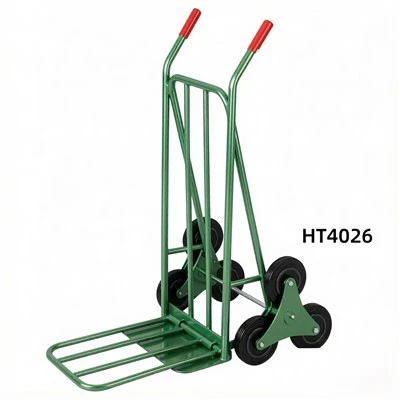
If you’re tired of hand trucks that are hard to turn, hard to control, or that give you flat tires mid-shift, it’s time to find a hand truck that’s built for your specific needs. Our team has helped hundreds of businesses find the right hand trucks for their operations, whether you’re a small boutique, a large warehouse, or a moving company. We can walk you through the different wheel options, frame designs, and weight capacities to find a hand truck that’s not just maneuverable, but that fits your budget and your workflow. If you’re ready to replace your old, hard-to-use hand trucks with ones that make your team’s job easier, reach out to us today to discuss your requirements and find the perfect solution for your business.
Lawn Roller References
- Occupational Safety and Health Administration. (2022). Manual material handling guidelines. U.S. Department of Labor.
- Material Handling Industry Association. (2021). Hand truck design and performance standards for commercial use. MHI Publications.
- Smith, J. (2020). The impact of wheel design on material handling equipment maneuverability. Journal of Industrial Ergonomics.
- National Institute for Occupational Safety and Health. (2019). Musculoskeletal disorders prevention in warehousing and logistics. NIOSH Report 2019-105.
Qingdao Herzhe Tools Manufacturing Co., Ltd.
Qingdao Herzhe Tools Manufacturing Co., Ltd. is one of the most professional hand trucks manufacturers and suppliers in China. We have world-leading production equipment and strong manufacturing capabilities. Please feel free to buy advanced hand trucks at competitive price from our factory.
Address: No. 406 Shuangfushan Road, Baoshan Town, Qingdao CHINA
E-mail: herzhetool@163.com
WebSite: https://www.herzhetoolsmfg.com/
