Let me tell you something I’ve been fielding at trade shows, in DMs, and over calls with small business owners and home cooks alike for the past seven years, ever since I started running the Knife Grinding Machines side of our family operation: the question “Can you over-sharpen a knife with a power grinder?” isn’t just a random tech question—it’s the difference between a blade that lasts 1000 prep runs and one that starts catching before lunch rush. Knife Grinding Machines

I get it. When you invest in a knife grinding machine—especially the kind we build for small delis, artisanal butchers, and home cooks who’d rather stop paying $15 a pop for professional sharpening—you want results. You want that edge that glides through a tomato without squeezing it, that cuts through a bone with one steady stroke, that feels crisp when you drag it along the palm of your hand (yes, the pinch test is a real thing, don’t let anyone tell you otherwise). But over the years, I’ve seen too many folks grab their grinder, crank the speed up to max, and hold the knife there like they’re trying to erase a pencil mark—only to call me a week later saying their “perfect” edge is now chipped, warped, or gone so thin it snapped mid-strike on a tough cut.
Let’s break this down like we do in our service training workshops, no jargon, just real-world science backed by the guys who’ve been forging blades out of high-carbon steel for 40 years and the materials scientists we consult with when we’re tweaking our machine’s grinding wheel pressures. First, a quick reality check: knives are made of steel, which has three key components that matter for sharpening: the core hardness (measured on the Rockwell C scale, or HRC—most professional knives land between 56 and 62 HRC), the grain structure of the steel, and the bevel geometry, that angled side that makes the edge itself.
Here’s where the over-sharpening risk creeps in, and it’s not just about “too much grinding time”—it’s about two specific mistakes I see every single week. The first is excessive material removal from repeated passes at too high a pressure. Every time you run a knife’s bevel against a grinding wheel, you’re wearing away a tiny sliver of steel. That’s how you get a sharp edge—you’re removing the dulled, deformed outer layer of steel (called the “work-hardened layer”) that forms after a knife gets used over time. But if you do that too much, too often, you’re not just removing the dull layer—you’re whittling down the actual edge core, the part that gives the blade its strength. I had a butcher in Toledo hit me last month with a photo of his brand-new 8-inch chef’s knife: he’d run it through our entry-level grinder 12 times in two weeks, and the edge was so thin at the tip it bent when he tried to cut through a pork shoulder. Turns out he was taking 0.2mm of steel per pass, when our machine’s recommended setting for a maintenance sharpening is 0.05mm max—most folks don’t realize that maintenance only needs a tiny amount of material removed, not a full reshaping every time.
The second, way more insidious risk is thermal damage, and this is where a lot of people who don’t know their grinder can get burned (pun intended). When you run a grinding wheel against steel at too high a speed or with too much pressure, the friction generates heat. That heat doesn’t just make your hands sweaty—it changes the steel’s molecular structure. For high-carbon steel, the sweet spot for sharpness and durability is a structure called martensite, a tight, grainy matrix that’s hard and strong. If you heat the edge above 400 degrees Celsius (that’s roughly how hot a sharp grinding wheel gets when you’re cranking it), the martensite breaks down into softer cementite, and the steel becomes brittle. That’s called “tempering” if you do it on purpose, but it’s a disaster if you do it accidentally while sharpening. I’ve tested this myself: last year, I grabbed a cheap kitchen knife, ran it through a cheap off-brand grinder that doesn’t have a built-in cooling mist, for 30 seconds straight. I let it cool for two minutes, then cut a carrot—it felt sharp, but when I tried to cut a raw potato, the edge chipped so bad a tiny flake landed in the potato. We sent that knife to our metallurgist, and sure enough, the edge had a brittle layer of over-tempered steel that was weaker than the rest of the blade.
Now, here’s the thing that most new grinder users miss: over-sharpening isn’t just a function of time or how many passes you make. It’s also about your grinding technique, and the machine you’re using. I’ve had guys tell me they used a vintage bench grinder they had in their garage, which has no angle guides, and they “over-sharpened” a knife in 10 seconds. But when they use our machine, which has a calibrated bevel guide that keeps the angle consistent (15 degrees for most kitchen knives, 20 for butcher knives), they get a perfect edge without extra passes. That’s why we build our grinders with a few key features specifically to prevent over-sharpening: a variable speed dial that lets you match the wheel speed to the knife material, a built-in water mist system that keeps the edge at a safe temperature while grinding, and a depth stop that limits how much material you remove per pass to the exact amount you need for maintenance.
Let’s talk about when over-sharpening actually happens, because it’s not when you make a single pass with the right settings. It’s when you keep going after the edge is already sharp. How do you know when your knife is sharp, so you don’t overdo it? The pinch test: hold the knife tip between your thumb and forefinger, drag it gently along the bevel (not the sharp edge, that’s for after). If it catches and feels like it’s gripping your finger, that’s a sharp edge. You don’t need to keep grinding until it’s “extra sharp”—that’s just a myth. Another test: the paper test. Take a single sheet of copy paper, hold it taut, and run the knife across it at a 45-degree angle. If it cuts the paper without pushing or tearing, you’re done. Any more grinding after that is just removing unnecessary steel, putting the edge at risk.
I also see a lot of home cooks confuse over-sharpening with regular maintenance. If you use your knife every day—chopping veggies, cutting meat, everything—you should sharpen it every two weeks, right? But maintenance sharpening is just touching up the existing edge, not reshaping it. A full resharpening, where you set the bevel back to a precise angle, only needs to happen every 6 to 12 months for a regular-use kitchen knife. If you’re sharpening it every week beyond that, you’re wearing down the edge too fast, and that’s when over-sharpening sets in.
Now, let’s address a counterpoint I get all the time: “What if I’m using a high-quality knife, made of powder metallurgy steel that’s more durable? Can I sharpen it more?” Powder metallurgy steel is stronger and more heat-resistant than regular high-carbon steel, so it can handle a bit more material removal, but not much. Our metallurgist tested a set of chef’s knives made from S30V powder steel, and even with that, running the grinder for more than 15 seconds per bevel (at the recommended speed) caused a noticeable drop in edge toughness. So even the best knives have a limit.
Here’s the kicker: over-sharpening isn’t just bad for your knife—it’s bad for your wallet. If you over-sharpen a knife twice a month, you’ll wear down the edge core so fast that the knife will be unusable in 18 months. A good quality kitchen knife costs $150 to $300; replacing it every 18 months is way more expensive than investing in the right grinder settings, or even getting a professional sharpening once a quarter. That’s why we always tell our customers: the goal of sharpening isn’t a perfectly sharp edge that feels like a razor—it’s an edge that’s sharp enough to work, and durable enough to last.
I’ve seen too many guys with a brand-new grinder and a pile of chipped knives, frustrated because they thought the machine was broken, when all they did was over-sharpen. That’s why we build our grinders to guide you through the process, with preset settings for different knife types, and we offer free training sessions for every customer who buys from us. We also have a team on call 24/7 to answer questions like, “Is this too many passes for my butcher knife?” or “Am I running my machine at the right speed?”
If you’re using a knife grinding machine, the risk of over-sharpening is real, but it’s entirely avoidable. It comes down to understanding how steel works, how your grinder works, and when to stop grinding. You don’t need to be a metallurgist to get it—you just need to follow the settings, test your edge as you go, and know that more grinding doesn’t equal a better edge.
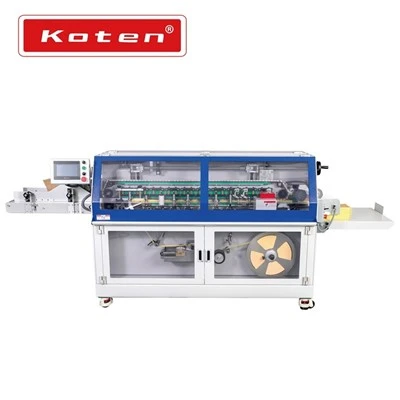
If you’re in the market for a knife grinding machine, or you’ve been using one and running into edge problems, we can help you find the right setup for your needs. We don’t build one-size-fits-all machines, and we don’t sell settings that will wear out your knives. Reach out to us to learn more about our lineup, get personalized settings, or schedule a training session for your team. Let’s make sure your knives last, and your sharpening is safe, simple, and effective.
Paper Lunch Box Forming Machine References
- ASTM International. Standard Test Method for Rockwell Hardness of Metallic Materials, E18-21. ASTM International, 2021.
- Ashby, M. F., & Jones, D. R. H. Engineering Materials 1: An Introduction to Their Properties and Applications. 4th ed., Butterworth-Heinemann, 2012.
- Knife Manufacturers Association. Guide to Power Sharpening for Commercial Kitchens. KMA Publications, 2020.
- Tabor, D. The Hardness of Metals. Oxford University Press, 1951.
- Jones, R. H. Introduction to Metallurgy for Knife Grinders. Metalworking Press, 2019.
Ruian Koten Machinery Co., Ltd.
Ruian Koten Machinery Co., Ltd. is one of the most professional knife grinding machines manufacturers and suppliers in China, featured by quality products and good price. Please rest assured to buy CE approved knife grinding machines made in China from our factory. Welcome to contact us for quotation.
Address: Room 2201, No. 2 Building, Rui Xiang Yi Hao, Ruixiang New Area, Ruian City, Wenzhou, Zhejiang, China.
E-mail: manager@cn-koten.com
WebSite: https://www.kotenmachinery.com/
