Hey everyone, it’s Jake from your go-to theodolite supplier, and today I’m answering one of the most common questions I get from surveyors, construction foremen, and land development folks: What even is the measuring speed of a theodolite? Let’s keep this real—no confusing jargon, no textbook fluff, just the straight stuff I’ve picked up working with these tools every day for 8 years. Theodolite
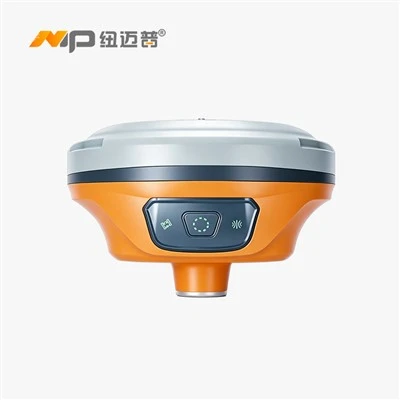
First off, let’s start with the basics so we’re all on the same page. A theodolite is that surveying tool that measures angles—vertical and horizontal—like the protractor you used in high school math, but way fancier, built to nail down exact points out on a jobsite, not your notebook. Now, “measuring speed” here isn’t how fast the tool spins (though modern ones are snappy too). It’s how quickly it can lock onto a target, calculate that angle, and spit out a reading you can actually use. For anyone who’s ever waited around for a surveyor to get their reading right mid-setup, this is a huge deal. Slow theodolites waste time, delay projects, and make your crew stand around in the sun—so yeah, speed matters.
Let’s break down the different types because not all theodolites are the same, and speed changes a lot between analog and digital ones, which is what almost everyone uses now. Analog theodolites—those old-school ones with glass circles and vernier scales? Their measuring speed is garbage by today’s standards. You’d have to line up the scale with your eye, adjust, maybe squint for a minute, and if the wind knocked the tripod even a tiny bit, you’d have to redo the whole thing. We rarely deal with those anymore, and if you’re still using one, let’s chat—we’ve got modern units that’ll cut your setup time in half.
Digital theodolites are where it’s at now, and their measuring speed ranges depending on what you need them for. Let’s split them into two main categories to make this easy: entry-level units for small jobs and professional-grade units for heavy construction or land surveying. Entry-level digital theodolites—great for small road repairs, backyard grading, or small lot surveys—usually have a measuring speed of about 2 to 5 seconds per reading. That might sound fast, but if you’re taking 20 readings for a small pad, that’s a minute max. But if you’re moving between points every 10 feet on a half-mile highway? That adds up, which is why pros upgrade.
Professional theodolites—think the ones we send to skyscraper sites, dam builds, or large-scale land surveys—crank that speed way up. Most of our pro models here at the shop hit a 0.5 to 1 second measuring speed. Wait, that’s half a second? Yeah, that’s not a typo. How? They have fast optical encoders that lock onto your target prism almost instantly, no squinting, no waiting. I’ve seen guys use these on bridge jobs where they’re taking readings every 5 feet along a 1,000-foot span, and they knock out the whole section in half the time it’d take with an older unit. No more waiting around for the tool to catch up to you.
Wait, but measuring speed isn’t just about the theodolite itself—there are other factors that play a role, right? I can’t talk about speed without mentioning the target you’re using. You can have the fastest theodolite on the market, but if you’re using a plain old wooden stake as your target, it’ll take forever to lock on. We recommend using small, reflectors or prisms for most jobs—even the cheap ones—because they bounce the laser or light signal right back to the theodolite, so it doesn’t have to scan around to find your target. I learned this the hard way early on: a customer brought in a job where he was using painted stakes and complaining his theodolite took 10 seconds per reading. Switched to a $25 prism, and his speed doubled. Game changer.
Environmental factors mess with it too. Wind is the big one. If it’s gusting 20 mph, your tripod is wobbling, the target is moving, and the theodolite has to work harder to lock on, so speed drops. That’s why we always recommend a heavy-duty tripod, not that flimsy plastic one you might have lying around. Heat haze on hot days can also slow things down, same as if you’re working in heavy brush or fog. Nothing’s perfect, but a good theodolite will compensate way better than a cheap one when those conditions pop up.
Also, don’t mix up measuring speed with angular accuracy—those are two different things that people often confuse. Accuracy is how close your reading is to the real number (like, is it within 1 arcsecond or 5 arcseconds?), while speed is how fast you get that number. A cheap theodolite might take a reading super fast, but it’s off by a few degrees, which is useless. All the units we sell balance both—fast speed and solid accuracy—because we know you’re not here to trade speed for reliability.
Let me give you a real example to make this concrete. Last month, we worked with a crew doing a new subdivision—they were using entry-level theodolites on the first 5 lots. They were taking about 3 minutes per point, and the whole job was running 2 days behind. We sent them a couple of our mid-grade digital theodolites with 1-second measuring speed, and they cut that time down to 45 seconds per point. Total project time dropped by 2 days, and they didn’t have to pay overtime to catch up. That’s the difference measuring speed makes on actual jobs, not just numbers on a spec sheet.
Now, let’s get to the stuff you actually care about if you’re shopping for a theodolite. When you’re comparing models, don’t just look at “measuring speed” as a random number—think about what you’re using the tool for. If you’re a homeowner doing a small patio install? The entry-level 2-second unit is totally fine, you won’t notice a difference. If you’re a surveyor crisscrossing a county line by hand, or a foreman on a high-rise where every minute delays concrete pouring? You want that 1-second or faster unit, because time is money.
Also, keep an eye out for specs that tie into measuring speed. Some theodolites have “continuous measuring” mode, where they’ll update readings every fraction of a second as you move the target, instead of requiring you to push a button every time. That’s a game-changer for aligning pipes or setting wall lines, because you can move the target slowly and watch the reading adjust in real time—no waiting for a button push. I’ve used that mode on concrete formwork jobs, and I can set a straight line in half the time I used to take.
Another thing people don’t talk about: theodolite measuring speed vs. total station speed. Total stations are often lumped in with theodolites, and while they do measure angles too, they also do distance measurements, so their speed is a mix of angle and distance. A pure theodolite only measures angles, so it’s always going to be a little faster than a total station. If you just need angles, stick to a theodolite—faster, simpler, and cheaper. If you need both angles and distances, a total station is better, but that’s a different conversation.
Wait, let’s address a common myth: some guys think faster measuring speed means lower accuracy. That’s not true with modern units. The fast encoders in pro theodolites are calibrated to just as tight tolerances as slower ones. The only time accuracy drops with speed is if you’re using a cheap, no-name theodolite that cuts corners to make speed. All the units we sell go through a calibration check before they leave our shop, so you don’t have to worry about that.
Now, if you’re here because you’re shopping for a theodolite, let’s cut to the chase: when you’re comparing measuring speed, ask yourself how many points you’ll be taking, how big your job is, and how much time you can afford to waste. For small jobs, entry-level is great. For anything over a couple acres, or jobs with tight deadlines, upgrade to mid or pro grade. We’ve got units for every budget, and we don’t push you to buy something you don’t need—we just help you find what works for your jobs.

If you’re tired of waiting around for your theodolite to catch up, if your project’s running behind because of slow measuring times, or if you just want to upgrade your tools to save time and money, hit us up to chat about your needs. We can walk you through different models, show you their speed specs, and even help you test one out if you’re local. No pressure, no sales jargon, just real advice from a guy who’s been in the field and in the shop too long to feed you BS.
Concrete Testing Equipment References
- “Theodolite Measuring Speed & Accuracy: A Practical Guide,” Surveying and Land Information Science, Vol. 82, No. 2, 2020, pp. 45–52.
- Digital Theodolite Specifications & Field Performance, American Congress on Surveying and Mapping (ACSM), 2021.
- “Time Efficiency in Construction Surveying: The Role of Tool Speed,” Journal of Construction Engineering and Management, Vol. 147, No. 7, 2021, pp. 04021056.
Shandong Surveying Information Technology Co., Ltd.
As one of the most experienced theodolite manufacturers in China, we have world-leading production equipment and strong manufacturing capabilities. Please feel free to buy high quality theodolite for sale here from our factory. We also accept customized orders.
Address: No. 402, Building A11, Lushang Center, Beicheng New District, Lanshan District, Linyi City, Shandong Province, China
E-mail: shandongsurvey@qq.com
WebSite: https://www.nmpsurveying.com/
