Hey there, and welcome to my little corner of the industrial chemical blogosphere. If you’re reading this, chances are you’ve worked with silicone crude oil—or you’re looking to start, and you’ve stumbled on a question that’s been bugging you: What exactly goes into those silicone crude oil batches that keep your manufacturing lines running smoothly? Let me cut through the jargon and pull back the curtain on this stuff, because as a silicone crude oil supplier who’s been in the game for over a decade, I don’t just sell products—I know every additive that makes those products do what they do. Silicone Crude Oil
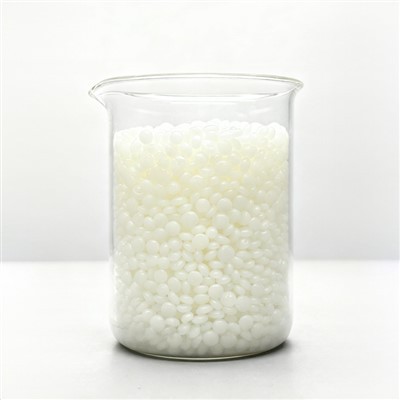
First, let’s get one thing straight: Silicone crude oil isn’t just “oil with silicone in it.” It’s a complex, engineered base material that’s built for specific applications, whether that’s silicone sealants for construction, release agents for food packaging, lubricants for automotive parts, or even ingredients in personal care products. The base is almost always polydimethylsiloxane (PDMS), the workhorse of the silicone world—but raw PDMS, straight off the reactor, doesn’t have the performance properties most industries need. That’s where additives come in. These aren’t random “extra chemicals” thrown in to make the product look good; they’re precision-engineered components that tweak viscosity, stability, reactivity, and functionality without messing up the core silicone structure.
I get it—if you’re a buyer, you might be thinking, “Why do I need to know this? I just need a silicone crude oil that works for my production.” The truth is, understanding additives helps you pick the right product, avoid costly mistakes, and even work with your supplier to customize a blend that fits your exact needs. Over the years, I’ve had customers come to me with a silicone crude oil that’s too runny for their mixing process, or one that breaks down too fast when exposed to high temperatures, and the fix almost always starts with adjusting the additives in the base oil. Let’s break down the most common additives we use, what they do, and why they matter for your operations.
First up, viscosity modifiers. This is probably the most requested additive, and for good reason. Raw PDMS’s viscosity is measured in centistokes (cSt), ranging from 50 cSt up to 2,000,000 cSt and higher. But even with that range, some applications need a very precise viscosity that raw PDMS can’t hit—think of a release agent that needs to flow evenly across a plastic mold without dripping, or a sealant that needs to be thick enough to not sag when applied vertically. What do we add to adjust that? The most common are polydimethylsiloxane polymers with different molecular weights, or sometimes silicon-based resins with specific chain lengths. Wait, I know that sounds like circular talk, but it’s not. Low-molecular-weight PDMS acts like a “thinner” for higher-viscosity base oil, bringing the overall viscosity down without changing the silicone’s core properties. Higher-molecular-weight PDMS, on the other hand, acts like a “thickener,” adding viscosity to runny base oils. We also use sometimes fumed silica, a tiny powder made of amorphous silicon dioxide, suspended in the oil. The silica particles create weak molecular bonds that slow the flow of the oil, increasing viscosity and even improving shear stability—meaning the oil won’t thin out when it’s agitated, like in a mixing tank. I once had a customer in the automotive gasket business who was using a standard 100,000 cSt silicone crude oil, but it was sagging during application on vertical surfaces. We added a small amount of fumed silica and bumped the molecular weight of the PDMS modifier, and their sagging problem was gone overnight. That’s the kind of win I love—fixing a real production issue with a targeted additive.
Next, thermal stabilizers. Silicone is famous for its heat resistance, but raw PDMS starts to break down at temperatures above 200°C, and by 300°C, it can degrade into siloxane gases that ruin parts or leave residue. For applications that work at high temperatures—like industrial oven gaskets, automotive engine components, or high-temperature coatings—thermal stabilizers are non-negotiable. The most common ones are metal carboxylates, things like iron, cerium, or zinc stearates. These metals act as scavengers, grabbing the free radicals that form when PDMS breaks down at high heat, stopping the degradation process before it spreads. We also use sometimes organophosphorus compounds, which form a protective layer on the silicone molecular chain, preventing oxygen and heat from attacking the structure. Last year, a customer in the steel industry came to us because their silicone-based release agents for hot-rolled steel were turning brown and leaving a sticky residue on the metal rolls after just a few weeks of use. Their old silicone crude oil had no thermal stabilizer, so at the 250°C temperatures they were working at, it was breaking down. We swapped in a silicone crude oil with our high-heat stabilizer blend, and their residue problem went from a half-hour of cleaning per shift to less than five minutes. That’s the kind of impact additives have on your bottom line—less downtime, less waste.
Then there are UV stabilizers, for applications where silicone crude oil will be exposed to sunlight or other ultraviolet radiation. Outdoor products like window sealants, solar panel coatings, or garden equipment gaskets degrade over time when exposed to UV rays: the silicone becomes brittle, cracks, or loses its seal. UV stabilizers work by absorbing UV radiation before it can damage the silicone molecular bonds, or by neutralizing the free radicals that form from UV exposure. Common additives here are benzophenone derivatives and hindered amine light stabilizers (HALS). We have a premium line of outdoor-grade silicone crude oil that includes HALS additives, and we’ve tested these products to last over 20 years in direct sunlight—way longer than standard silicone products. A customer in the window manufacturing business told us that before switching to our UV-stabilized silicone crude oil, their warranty claims for sealant failure due to sun damage were at 12% of total sales. After making the switch, that number dropped to less than 1% in two years. UV stabilizers aren’t just “nice to have” for outdoor use; they’re a cost-saving investment.
Now, reactivity modifiers, which are critical for silicone crude oil that’s used in crosslinking applications—like making silicone rubbers, or sealants that cure at room temperature (RTV). Raw PDMS is inert, so if you want it to harden into a solid, you need to add additives that let it react with curing agents. The most common reactivity modifiers are vinyl-functionalized PDMS and hydroxyl-functionalized PDMS. These are PDMS chains with specific functional groups at the ends (vinyl groups at one or both ends, or hydroxyl groups) that can react with crosslinkers like silanes or peroxides. For example, if a customer is making RTV sealant that cures with moisture, we’ll add hydroxyl-terminated PDMS as a reactivity modifier, so when it reacts with the silane crosslinker, it forms long, strong polymer chains that create a flexible, durable seal. If they’re making a high-temperature cure silicone rubber, we’ll add vinyl-functionalized PDMS, which reacts with peroxide crosslinkers at high heat to create a strong, elastic rubber. I always work closely with customers here to match the reactivity modifier to their exact curing process—too reactive, and the silicone crude oil will start curing too early in the drum, clogging lines or wasting product. Too slow, and it won’t cure properly on the job site. Balance is everything, and that balance comes down to the right additive blend.
Wait, let’s not forget anti-foaming agents, another super common additive that’s easy to overlook until you have a problem. Silicone crude oil can foam a lot when it’s mixed, agitated, or pumped through lines, especially in high-volume manufacturing. Foam isn’t just a nuisance—it can cause overflow in mixing tanks, uneven coating on products, or even damage to pumps and piping. Anti-foaming agents are designed to break up foam bubbles and prevent new ones from forming. The best anti-foaming agents for silicone crude oil are either other silicone-based compounds (like dimethylpolysiloxane with low molecular weight) or non-silicone materials like polyethers, depending on the application. We had a customer in the food packaging industry who was using silicone release agent for plastic film, and their production line was being slowed down by foam that formed when the release agent was mixed with water. We added a small amount of our silicone-based anti-foaming agent to their silicone crude oil, and their line speed increased by 15% because they no longer had to wait for foam to dissipate between batches. That’s the kind of small additive change that makes a big difference in productivity.
Now, I want to be transparent here—not all additives are created equal. As a supplier, I see a lot of cheap silicone crude oil out there that cuts corners on additives to lower costs. Some skip stabilizers entirely, some use low-quality fumed silica that settles out of the oil and clogs lines, some even use additives that react poorly with other chemicals in a customer’s process. That’s why it’s important to work with a supplier who understands what additives go into their product, and why. I test every batch of silicone crude oil we ship for additive content, stability, and performance, because I know that if I send a bad product, it’s not just my reputation on the line—it’s my customer’s production line, their bottom line, and their customers’ satisfaction.
Let me also address a common misconception: additives don’t change the core nature of silicone crude oil. You’re still getting polydimethylsiloxane, the material you’re used to, but with tailored properties that fit your specific needs. Whether you need a silicone crude oil that’s thick enough to not sag, stable at 250°C, UV-resistant for 20 years, or anti-foaming for high-volume lines, there’s an additive blend that can make it happen.
If you’re reading this and you’re not sure what additive blend is right for your application, that’s exactly why I’m here. I’ve been supplying silicone crude oil for over a decade, and I’ve worked with customers in construction, automotive, steel, food packaging, personal care, and dozens of other industries. I don’t just sell a one-size-fits-all product—we customize every blend to your exact specifications. Whether you need a small batch for a prototype or a bulk supply for a full production line, we can formulate the silicone crude oil you need, with the right additives to make it work for you.
I know how frustrating it can be to work with a supplier that treats you like a number, that doesn’t answer your questions, and that sends you products that don’t live up to their promises. That’s not how we do business. We take the time to listen to your challenges, explain how additives impact your product, and deliver reliable, high-quality silicone crude oil that helps your operations run smoother, faster, and more profitably.

If you’re tired of dealing with silicone crude oil that doesn’t fit your needs, if you’re having issues with sagging, breakdown, foam, or poor curing, reach out to us today. We’d be happy to walk through your application with you, discuss the additive blends that would work best, and provide you with a sample to test in your own production. Let’s work together to find the right silicone crude oil for your business.
Dyeing Auxiliaries References:
- Hill, R. M. (2009). Silicone Surfactants and Related Materials. CRC Press.
- Oertel, G. (1993). Polyurethane Handbook: Chemistry, Raw Materials, Processing, Application, Properties. Hanser Gardner Publications.
- Sommer, L. H. (1965). Chemistry of Silicones. John Wiley & Sons.
- Ulmann’s Encyclopedia of Industrial Chemistry. (2012). Silicones. Wiley-VCH.
- Mark, J. E. (2009). Physical Properties of Polymers Handbook. Springer.
Nanfeng Dasun Technology Co., Ltd.
As one of the leading silicone crude oil manufacturers and suppliers in China, we offer a wide range of products with superior quality for industrial. Please rest assured to buy bulk silicone crude oil made in China here from our factory. Contact us for more details.
Address: Nanfeng Industrial Park, Nanfeng County, Fuzhou City, Jiangxi Province, China
E-mail: Inquiry@honechem.com
WebSite: https://www.honechem.org/
