Hey there, if you’ve ever stared at a window during a brutal winter wind chill or a sweltering summer heatwave, you’ve probably wondered: is my glass doing enough? As an insulated glass supplier, I get this question at least 10 times a day—folks are tired of drafty windows jacking up their energy bills or stuffy rooms feeling like saunas. The big call usually comes down to double-pane vs. triple-pane insulated glass, and it’s not a one-size-fits-all answer. Let me break this down like I would with a regular homeowner or a small builder, no stuffy jargon, promise. Insulated Glass
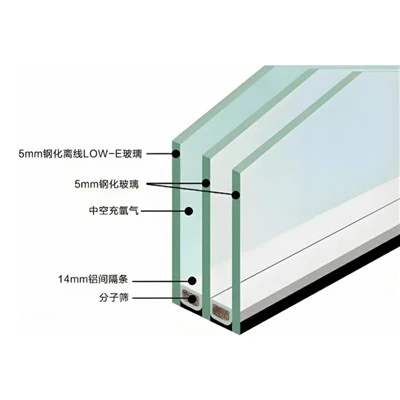
First off, let’s keep it basic: what even are these two? Double-pane (sometimes called dual-pane) is two glass panels with a gap between ‘em—usually filled with argon gas instead of just air, which is better at trapping temperature. Triple-pane is three glass panels, two gaps, more argon, thicker overall. The key differences are R-value (that’s the heat resistance number you see on energy guides), weight, cost, and how they perform in extreme temps. But here’s the thing—just because triple-pane has a higher R-value doesn’t mean it’s always the right pick. Let’s walk through when to pick each, based on where you live, your budget, what you’re using the space for, and even how old your house is.
Let’s start with triple-pane, because that’s what a lot of people assume is “better,” but it’s not for everyone. First, if you’re in a place with super extreme temperatures—like parts of Minnesota where winter lows drop to -20°F, or Arizona where summer highs hit 115°F on the regular. I had a customer last year in northern Wisconsin, their old single-pane windows were making their furnace run 12 hours a day, and their AC was a lost cause. We swapped ‘em for triple-pane, and their energy bills dropped by 38% in six months. That makes sense because the extra layer is like an extra blanket for your window. The two gas gaps mean less heat transfer—so in winter, your warm air doesn’t leak out, and in summer, the hot air from outside doesn’t seep in. Also, if you live in a super loud area—like near a highway or a busy downtown street—triple-pane’s thicker glass and two gaps do a way better job blocking noise. I had another customer in Chicago, right off a busy expressway, said you could hear every car horn and siren through their old double-pane. Switched to triple, now they can have a conversation without yelling, and their TV doesn’t get drowned out by traffic.
But wait—triple-pane has downsides. First, it’s way heavier. A triple-pane window might be 50-70 pounds, compared to a double-pane’s 30-40. If you’re retrofitting an old house, that can be a problem. The original window frames or walls might not be built to hold that extra weight, so you could end up paying for reinforcements, which adds to the cost. Also, triple-pane is more expensive upfront—usually 20-30% more than double-pane. And it’s thicker, so if you have narrow window sills or you’re trying to match existing trim, it might not fit. I had a small business owner last month in Boston, they were renovating a 1920s storefront, and their original sills were only 2 inches deep. Triple-pane was 2.5 inches, so they had to rework the whole sill, which doubled their window budget. Oops, that’s a headache.
Now double-pane—this is the workhorse, and it’s perfect for a ton of scenarios. Let’s start with moderate climates—like the Pacific Northwest, where it rains a lot but temps rarely go below 20°F or above 85°F. Most homes there use double-pane, and they’re totally fine. The R-value for a standard double-pane with argon is around R-3 to R-4, which is enough to keep energy bills reasonable. Also, if you’re on a tight budget—new construction or a renovation where you’re sticking to a budget—double-pane is the way to go. I just finished a project for a family building a new home in Portland, they didn’t want to drop extra cash on triple-pane, and their utility bills ended up being way lower than their neighbors who went triple, because the climate there doesn’t need that extra layer. Another big one: if you’re retrofitting a home with standard frames, or if you have window openings that are tight. Double-pane is thinner, so it fits into most existing sills without modifications. I also recommend double-pane for rental properties or short-term rentals—since it’s cheaper upfront, and if a window gets broken, replacing it is way easier and cheaper than triple-pane. No landlord wants to drop $500 on a window just because a tenant knocked over a chair, right?
Wait, but hold on—there are middle ground things, too, that a lot of people don’t talk about. Like, you can get double-pane with a low-e coating, which is a thin layer on the glass that reflects heat. That bumps up the R-value to around R-4 to R-5, almost close to triple-pane, but without the weight and cost. I’ve sold a lot of those in places that are a little more extreme than moderate—like parts of Colorado, where winters are cold but not brutal, summers are dry and hot. The low-e double-pane works great there, because it reflects heat in summer and traps it in winter, without the extra bulk. That’s a good sweet spot for people who don’t want to go full triple.
Let’s also talk about common mistakes people make. I had a customer last year in Dallas, who went triple-pane because his friend in Minnesota swore by it. But Dallas summers are super hot, and triple-pane actually can trap more heat if you don’t have the right low-e coating—wait, no, actually, no, that’s a different mistake. Wait, no, he didn’t consider that triple-pane’s thickness meant his window treatments (big blackout curtains he wanted for his media room) wouldn’t fit. He ended up having to return the curtains and get custom ones, which cost him an extra $800. That’s the kind of thing you don’t think about until it’s too late. Another mistake: buying the cheapest double-pane without argon gas. Air gaps are way worse at heat transfer than argon, so a cheap double-pane with air is barely better than a single-pane. Always make sure the gap is filled with argon (or krypton, but argon is more common) for maximum efficiency.
Also, let’s touch on long-term vs. short-term. If you’re planning to sell your home in 5-10 years, triple-pane might add more to your resale value, but the upfront cost might not pay off in that time. Double-pane has a faster ROI—usually 5-7 years, compared to triple-pane’s 10-15 years. I did a quick calc once for a customer in Detroit: double-pane would save him around $120 a year on energy, so payback in 8 years. Triple-pane would save $180 a year, but cost $1,500 more, so payback in 12 years. He was staying in the house for 15 years, so triple made sense, but if he was moving in 7, double was the call.
What about commercial spaces? I work with a lot of small retail shops and offices. For offices that are open all day, in a moderate climate, double-pane is fine, it’s cheaper and easier to replace if a window breaks. For retail stores in super cold places, like a grocery store in Fargo, triple-pane is better because the big open doors mean more temperature fluctuations, so you need all the heat retention you can get. I just did a job for a coffee shop in Minneapolis, they wanted triple-pane for the front windows because people stand outside waiting in the cold, and the coffee shop’s AC doesn’t have to work as hard to keep the space warm when those windows are trapping heat.
Wait, also—soundproofing isn’t just about noise. If you have a home theater, or a nursery where you don’t want outside noise waking a baby, triple-pane is better, but even a double-pane with a thicker gap (like ½ inch vs. ¼ inch) helps a lot. I had a customer with a nursery in Brooklyn, they got double-pane with a ½ inch argon gap, and said it cut street noise by half, so the baby slept way better. That’s a cheaper option than triple if you don’t need the extra heat resistance.
Let me wrap this up with a quick cheat sheet, because I know y’all are busy:
Go triple-pane if:
- You live in a place with temps below 0°F or above 100°F regularly
- You’re near a super loud highway, airport, or downtown area
- You have extra-heavy window frames or you’re renovating a long-term home (10+ years)
- You want maximum noise reduction and heat control
Go double-pane if:
- You live in a moderate climate (no extreme hot/cold)
- You’re on a tight budget, or doing retrofits without window modifications
- You’re renting, selling soon, or need easy replacement options
- You want a good balance of efficiency and cost
And don’t sleep on the low-e coating—It can boost double-pane’s performance to almost triple-levels without the extra cost, so ask your supplier about that!
If you’re still stuck, just hit me up. I’m not here to push the most expensive stuff, I’m here to get you what works for your space. Whether you’re a homeowner doing a single window or a builder working on 50 new homes, I can help you figure out the right glass, no guesswork. Just reach out to chat about your project, your location, and what you’re looking for—we’ll get you sorted.
Insulated Glass REFERENCES
- Department of Energy. (2022). Window Insulation Facts: Understanding R-Value and Glass Types. U.S. Department of Energy.
- National Fenestration Rating Council. (2021). Double vs. Triple Pane Window Performance Comparison. NFRC.
- Energy Star. (2023). Choosing Energy-Efficient Windows for Your Climate. Energy Star.
- International Association of Certified Home Inspectors. (2022). Common Window Installation Mistakes and How to Avoid Them. InterNACHI.
Suzhou Dingcheng Tempered Glass Co., Ltd.
As one of the most professional insulated glass manufacturers and suppliers in China, we also support customized service. We warmly welcome you to wholesale high quality insulated glass made in China here from our factory. If you have any enquiry about free sample, please feel free to email us.
Address: No.777 Limin North Road, Lili Town, Wujiang District, Suzhou City, Jiangsu Province
E-mail: Dingchengglass@163.com
WebSite: https://www.dingchengglass.com/
