Hey there! As a supplier of Permanent Magnet DC Motors (PMDC motors), I often get asked about the full – load speed of these motors. You know, in the business of selling PMDC motors, understanding the full – load speed is super important. It’s like the heart rate of a motor, telling you how well it can perform when it’s doing its job under the most demanding conditions. Permanent Magnet DC Moto
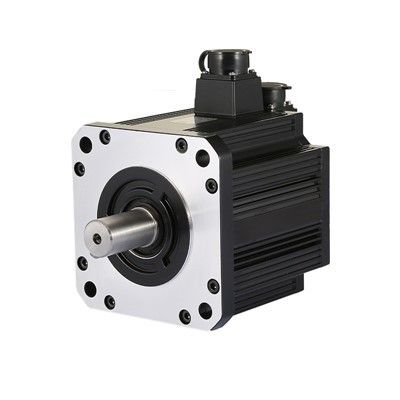
Let’s first break down what we mean by "full – load speed." When we talk about a PMDC motor, the full – load speed is the rotational speed of the motor’s shaft when it’s operating at its rated power and under its full – load torque. In simpler terms, it’s how fast the motor can spin when it’s doing the maximum amount of work it’s designed to do.
So, how does a PMDC motor work? Well, in a PMDC motor, we use permanent magnets to create the magnetic field. Unlike some other types of motors that use electromagnets to generate the field, the permanent magnets in our PMDC motors are constantly producing a magnetic field. When we apply an electric current to the armature, which is the rotating part of the motor, the interaction between the magnetic field of the permanent magnets and the magnetic field created by the current in the armature causes the armature to rotate.
Now, a bunch of factors can affect the full – load speed of a PMDC motor. One of the main factors is the number of turns in the armature winding. If we increase the number of turns, the resistance of the armature increases. This leads to a decrease in the current flowing through the armature for a given applied voltage. With less current, the torque produced by the motor is reduced, and as a result, the full – load speed also decreases.
The strength of the permanent magnets also plays a huge role. If we have stronger permanent magnets, the magnetic field they create is more powerful. This increased magnetic field will interact more strongly with the armature’s magnetic field, resulting in a higher torque. A higher torque can generally maintain a more consistent speed even under full – load conditions, so the full – load speed can be better regulated.
Another important aspect is the applied voltage. In a PMDC motor, the speed is roughly proportional to the applied voltage. When we increase the voltage, the current flowing through the armature increases, which in turn increases the torque and the speed of the motor. However, we have to be careful not to exceed the motor’s rated voltage because that can damage the motor.
Let’s dive a bit deeper into the relationship between torque and speed. In a PMDC motor, as the load on the motor increases (which means the torque required to drive the load increases), the speed of the motor tends to drop. This is because the motor has to work harder to overcome the increased load. For example, if you’re using a PMDC motor to drive a conveyor belt and you suddenly add more weight to the belt, the motor will slow down a bit as it tries to keep moving the extra load.
But the good thing about PMDC motors is that they have a relatively linear speed – torque characteristic. This means that we can predict how the speed will change as the torque changes. There’s a simple formula that can give us an idea of this relationship:
[n = n_0-\frac{R_a}{K_{\phi}K_T}T]
Here, (n) is the speed of the motor, (n_0) is the no – load speed (the speed when there’s no load on the motor), (R_a) is the armature resistance, (K_{\phi}) is the motor constant related to the magnetic field, (K_T) is the torque constant, and (T) is the load torque.
For us as suppliers, understanding these relationships helps us offer the right motor for the right application. If a customer needs a motor for a high – speed application with relatively low load, we’ll recommend a motor with a higher no – load speed and a low armature resistance. On the other hand, if the application requires high torque and a more stable speed under varying loads, we’ll suggest a motor with stronger permanent magnets and a better – designed armature.
In real – world applications, PMDC motors are used in a wide range of industries. In the automotive industry, they’re used in things like power windows, windshield wipers, and seat adjusters. In consumer electronics, you’ll find them in things like DVD players and electric toothbrushes. Each of these applications has different requirements for the full – load speed and torque.
For example, in a power window system, the motor needs to be able to operate at a consistent speed to smoothly raise or lower the window. If the full – load speed is too high, the window might move too quickly and could cause damage. If it’s too low, the window might move too slowly, which would be inconvenient for the user.
When it comes to choosing the right PMDC motor for an application, it’s not just about the full – load speed. We also need to consider other factors like the motor’s efficiency, its size, and its cost. A more efficient motor will consume less power, which can be a big advantage in battery – powered applications. A smaller motor might be required if space is limited, and of course, cost is always a concern for most customers.
As a supplier, we work closely with our customers to understand their specific needs. We’ll often ask them about the type of load they’re going to be driving, the required speed range, and any other constraints they might have. Based on this information, we can recommend the most suitable PMDC motor from our product range.
We also offer customization options. If our standard motors don’t meet the exact requirements of a customer, we can modify the motor’s design. For example, we can change the number of turns in the armature winding or use different types of permanent magnets to achieve the desired full – load speed and torque characteristics.
If you’re in the market for a PMDC motor, whether it’s for a small DIY project or a large – scale industrial application, we’re here to help. We’ve got a team of experts who can answer all your questions about full – load speed, torque, and other motor specifications. We can provide you with detailed technical information and even offer samples for testing.
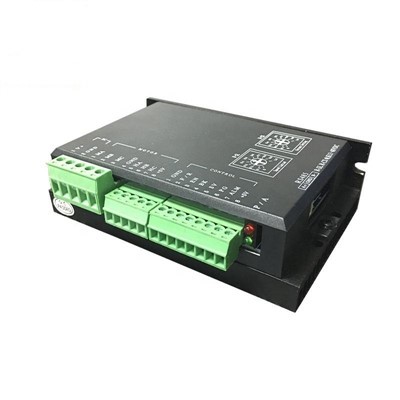
So, if you’re looking for a reliable PMDC motor supplier, don’t hesitate to get in touch with us. We’re committed to providing high – quality motors at competitive prices. Whether you need a motor with a specific full – load speed or other performance criteria, we can work with you to find the perfect solution.
Gear Motor References:
- Electric Machinery Fundamentals, Stephen J. Chapman
- Principles of Electric Machines and Power Electronics, P. C. Sen
Zibo Auric Mechanical and Electrical Technology Co., Ltd.
As one of the leading permanent magnet dc moto manufacturers and suppliers in China, we warmly welcome you to buy advanced permanent magnet dc moto for sale here from our factory. All customized motors are with high quality and competitive price.
Address: B419, High-tech Entrepreneurship Park, High-tech Zone, Zibo City
E-mail: cui@auricmotor.com
WebSite: https://www.auricmotor.com/
