Hey everyone, it’s Jake here, and if you’ve ever been part of any industry that needs products to stay fresh, safe, or just perform as long as possible, you know how big of a deal oxygen is. Over the 8 years I’ve been running my laminated aluminum foil roll supply business, one question comes up more than any other: “How well does this stuff actually block oxygen?” Today, I’m breaking that down—no stuffy textbook jargon, just real-world facts and what I’ve seen working with packaging teams across food, pharma, and tech. Laminated Aluminum Foil Roll
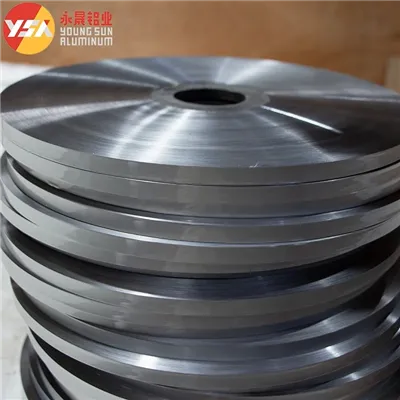
Let’s start with the basics that make laminated aluminum foil roll such a beast against oxygen. You know when you go to the grocery store and grab a bag of nuts that says “resealable, stays fresh for 12 months”? Or when your prescription meds come in a blister pack that keeps them from going bad? A huge part of that barrier is aluminum foil—but it’s not just plain foil we send out. Our standard laminated rolls combine aluminum with other thin layers, like polyethylene (PE) or polyester (PET), depending on what the customer needs. That lamination part is key, way more than just stacking layers for looks.
First, let’s talk about oxygen transmission rate (OTR)—the actual scientific number that measures how much oxygen can get through a material in a set time, usually in cc per square meter per day at a certain humidity and temperature. For reference, regular plastic wrap (the stretchy stuff you put on leftovers) has an OTR of like 200 cc/m²/day. That means oxygen floods right through it in a day. Now, our laminated aluminum foil rolls? Their OTR is basically zero—like, less than 0.001 cc/m²/day. For all practical purposes, oxygen can’t get through. But wait, why not just use plain aluminum foil instead of laminating it? Because plain foil is super thin—like, if you hold it up to light, you can see tiny pinholes, even if they’re too small to notice at first. Those pinholes are tiny paths for oxygen to sneak through. Laminating it adds that extra layer that seals up those pinholes, plus it makes the foil stretchier, tear-resistant, and able to be printed on (super important for food brands that need to put their logo and nutrition facts on the pack).
I’ve seen this first-hand with a craft snack client who was using plain foil rolls to package roasted pumpkin seeds. At first, their seeds were going rancid in 2 months—customers were leaving bad reviews, and we dug into why. Their plain foil had some micro-pinholes that they didn’t notice during their quality check. Once they switched to our laminated roll (we paired 9-micron aluminum with a 12-micron PE layer), their seed shelf life jumped to 11 months. No more rancidity, no more returns. That’s the kind of win that makes this whole thing worth it.
But let’s get into the nitty-gritty of why lamination doesn’t mess with the oxygen barrier. The aluminum layer itself is what does the heavy lifting. Aluminum is a non-porous metal—meaning its molecules are packed so tight that gas (oxygen, nitrogen, even moisture) can’t pass through them at all. The pinhole issue with plain foil is the only gap, and lamination fixes that by creating a continuous, sealed structure. When we bond the aluminum to the other layers (we use food-grade adhesives for food packaging, medical-grade for pharma), there’s no space between the layers for oxygen to seep through. That’s why the OTR stays so low, even with the extra layers.
Wait, but not all laminated aluminum foil rolls are created equal. I can’t stress that enough. A lot of guys out there sell cheap rolls with thin aluminum layers (like 6 microns) that have more pinholes, or use low-quality adhesives that break down over time. If that adhesive starts to fail, you get gaps between the layers, and suddenly oxygen can get through. We test every single roll we ship—we do OTR tests, pinhole checks, peel strength tests—to make sure the barrier holds up. Last year, we had a potential client from a pharmaceutical startup reach out because they were having issues with their insulin vial seals. They were using a cheaper laminated roll, and after 6 months, the OTR was 0.05 cc/m²/day—way too high for insulin, which needs to stay free of oxygen to be effective. We sent them a sample of our medical-grade laminated roll, and their test results came back at 0.0008 cc/m²/day. They switched immediately, and now they’re a repeat client who refers us to every other pharma company they know.
Another big factor that people don’t talk about: how temperature and humidity affect the barrier. Aluminum is pretty stable, but if you get super high humidity (like 90%+) for long periods, or extreme temperatures (over 120°F, or under -40°F), can that mess things up? For our standard food-grade laminated rolls, no—they’re designed to hold up in most storage and shipping conditions. The PE layer we use is moisture-resistant, so it protects the aluminum from corrosion, which is another big one. If aluminum corrodes, it can develop tiny gaps that let oxygen through. So that outer layer doesn’t just make the foil easier to handle—it actually protects the oxygen barrier from environmental damage. For more extreme conditions, like clients shipping products to the Arctic or deploying electronics in space, we make custom laminated rolls with extra barrier layers, like EVOH (ethylene vinyl alcohol) or polyamide (nylon), which add even more resistance to moisture and temperature swings.
Let’s talk about use cases to make this real. For food packaging: coffee is a perfect example. Coffee goes stale super fast when exposed to oxygen—oxidation breaks down the oils that give coffee its flavor. A lot of coffee roasters switch to our laminated foil roll for their ground coffee bags, and they say the flavor stays consistent for 18+ months, compared to 3 months in plastic bags. For pharma: vaccines are even more sensitive—most need to be stored at specific temperatures, and even tiny amounts of oxygen can make them ineffective. Our medical-grade laminated rolls are used for vaccine vial seals, pre-filled syringe packaging, and blister packs for tablets that degrade in oxygen. For tech: lithium-ion batteries are used in everything from phones to electric cars, and oxygen can damage the battery’s electrolyte, reducing lifespan and safety. We supply laminated foil rolls to battery manufacturers that use our product to seal battery casings, and their battery lifespan is extended by 20-30% because oxygen can’t get in.
I get it—if you’re a packaging buyer, you’re probably juggling costs, quality, and lead times. You don’t want to spend more than you have to, but you also don’t want to have a product failure that costs you customers or even regulatory headaches. That’s why I always tell clients not to just look at the aluminum thickness. A thin, well-laminated roll with a strong seal is way better than a thick foil roll with pinholes or bad adhesion. We’ve had clients come to us after wasting money on cheaper rolls that failed, and switching to our product actually saved them money in the long run—no more returns, no more spoilage, no more reworking packaging.
Wait, but is there any scenario where laminated aluminum foil roll isn’t 100% oxygen-proof? Let’s be honest—nothing is, but for all practical industrial and commercial purposes, it’s as close as you’re going to get. If you have a hole torn in the roll, or a bad seal along the edges, oxygen will get in—but that’s a user error, not a problem with the barrier itself. Our rolls are designed to be easy to convert (print, cut, seal) on standard packaging machines, so you can get a perfect seal every time if you’re using the right equipment. We also offer free conversion training for all our clients, because a great barrier does no good if you seal the bag wrong.
Let me wrap this up. The oxygen barrier performance of laminated aluminum foil roll is one of its biggest superpowers, and it’s not just the aluminum—it’s the lamination, the quality of layers, and the testing that go into every roll we ship. From small-batch craft snacks to global pharma giants, our customers rely on that near-zero OTR to keep their products safe, fresh, and effective.

If you’re dealing with products that need to avoid oxygen spoilage, extend shelf life, or meet strict regulatory requirements, let’s chat. I don’t do the hard sell—just real talk about what you need, what will work, and what won’t. We can send you a free sample, run a custom OTR test if you need it, and work with your timeline and budget. Hit me up, and let’s figure out the right laminated aluminum foil roll for your needs.
Aluminum Coil References:
- Hanson, D. (2005). Gas Barrier Films for Packaging. Wiley-Science.
- Soroka, W. (2019). Fundamentals of Packaging Technology. Institute of Packaging Professionals.
- ASTM D3985. Standard Test Method for Oxygen Gas Transmission Rate Through Plastic Film and Sheeting Using a Coulometric Sensor. American Society for Testing and Materials.
- Rooney, M. L. (1995). Aluminum Barrier Laminates: Structure, Properties, and Applications. Journal of Packaging Science and Technology.
Henan Yongsheng Aluminum Industry Co., Ltd.
We are one of the most reliable laminated aluminum foil roll manufacturers and suppliers in China. With abundant experience, we warmly welcome you to buy high-grade laminated aluminum foil roll for sale here from our factory. All custom made products are with high quality and competitive price.
Address: Gongyi City Industrial Cluster District, Huiguo Town, Gongyi City, Henan Province
E-mail: eric@ysaluminum.cn
WebSite: https://www.ysaluminummill.com/
