
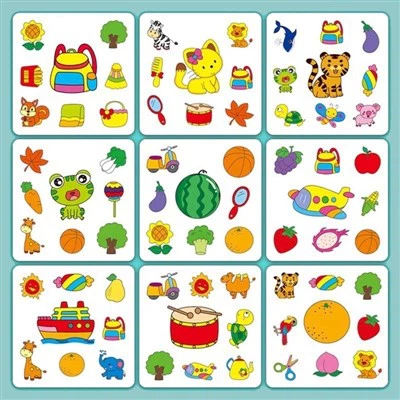
Learning Cards A few months back, a regular customer popped into our office unannounced, notebook clutched to their chest like a lifeline. They were a high school biology teacher in a rural state, and they were frustrated. “I’ve tried every study hack out there,” they said, running a hand through their graying hair, “spaced repetition apps, quiz banks, even those colorful wall posters—nothing sticks. My kids can recite the steps of mitosis but mix up metaphase and anaphase by quiz day, and half of them forget key terms before the final.” They flipped open their notebook to a page dotted with scrawled, half-finished paper flashcards, edges curled from being stuffed into backpacks and crumpled under desk legs. “I thought flashcards were outdated,” they went on, “but I made these tiny, 3×5 ones for myself to study the new state curriculum standards, and I’ve actually kept the information for months. Is there something to these little cards, or am I just lucky?” That conversation stuck with me, because it’s a question we hear all the time in our line of work: Do learning cards actually help with memory, or are they just a nostalgic, 20th-century study crutch that’s been dressed up for today’s learners? As someone who’s spent the last seven years running this small learning card supply company, talking to teachers, students, corporate trainers, and even retirees picking up new skills, I’ve dug into the science, tested our products, and watched thousands of people use these cards to turn cramming into lasting memory. The short answer? Yes—when they’re used right, learning cards aren’t just a memory aid; they’re a memory tool that works with how our brains are wired, not against it. To get to that “why,” let’s break down the science behind how memory works, how learning cards fit into that process, and where most people (and even some vendors) go wrong when using them. First, let’s talk about what happens when we try to learn something new. Our brains don’t store memories like files on a computer, neatly organized in folders. Instead, memory is a messy, connective process. When we first encounter a new piece of information—say, the definition of “operant conditioning” or the capital of Mongolia—our working memory (the tiny, temporary space we use for things we’re actively thinking about) can only hold 4 to 7 pieces of information at a time. That’s it. If you hear a list of 10 terms and don’t review them within 20 minutes, most of them will slip out of working memory before you even have a chance to move them to long-term memory, where they’ll stay for days, months, or even years. That’s where learning cards come in. This is the part that many people miss: flashcards, or learning cards, turn passive information (reading a textbook page, watching a lecture) into active recall. Let’s explain that term because it’s the backbone of why these cards work. Active recall is the act of pulling information out of your brain without looking at it, instead of just recognizing it when you see it. When you look at a learning card that has a question on the front—“What is the process by which plants convert sunlight into energy?”—you have to dig up that answer from your memory, not just passively read it. Studies show that active recall strengthens memory pathways way more than passive review. A 2018 study from the Department of Psychology at Washington University in St. Louis found that students who used active recall learned 30% more information and retained it twice as long as students who just reread their notes or textbook chapters. That’s not a small difference. But here’s the catch: not all learning cards are created equal, and that’s where a lot of confusion comes in. For example, a paper flashcard that says “mitosis = cell division” is a useful tool, but a learning card that prompts you to not just define mitosis, but connect it to related concepts—like what happens if mitosis goes wrong, or how it’s different from meiosis—activates even more memory pathways, making the information stickier. That’s why at our company, we don’t just print blank cards or pre-made sets with one-word answers. We design our cards with layered prompts that encourage that connection, because we’ve seen firsthand that’s what moves information from short-term to long-term memory. Another science-backed feature of learning cards is that they’re portable and flexible, which ties into the concept of spaced repetition. Spaced repetition is the idea that reviewing information at increasing intervals—first 10 minutes after you learn it, then a day later, then a week, then a month—helps move it into long-term memory. Apps like Anki and Quizlet have made spaced repetition popular in recent years, but learning cards are the original spaced repetition tool, and they work for the same reason. The teacher I mentioned earlier was carrying her 3×5 cards because she could pull them out during her commute, between classes, while waiting for coffee. That flexibility means you can space reviews in small, bite-sized chunks, which is exactly what works for working memory. You don’t have to set aside a 2-hour study block; you can review 10 cards on your lunch break, 10 more while waiting for the bus, and that adds up to consistent, spaced practice. I’ve seen this work with everything from high school students studying for AP exams to corporate sales teams learning new product guidelines to retirees learning Spanish for a trip. A few years back, we supplied cards to a 70-year-old man in Florida who was taking Spanish classes at a community center. He told us he hated apps, because he didn’t want to stare at a phone screen for hours every night. Instead, he kept a set of our pocket-sized Spanish verb cards in his pocket, and every time he waited for his grandkid to finish soccer practice, he’d flip through 15 cards. By the end of the semester, he was one of only two students in his class to pass with an A, and he told me he still uses the same set to order coffee in Spanish three years later. That’s the power of consistency, made easy by a tool that fits into his life, not the other way around. But here’s where I need to be honest: learning cards aren’t a magic fix. I’ve heard plenty of people say they tried flashcards and they didn’t work, and almost every time, the issue isn’t the cards—it’s how they’re being used. The biggest mistake people make is only reviewing the cards they get wrong, or cramming all their card reviews into one night before a test. Cramming works for short-term memory—you can pull off a good grade on a quiz if you cram for 3 hours the night before—but that information is gone within a week, because it never moves to long-term memory. I saw this last year with a group of college students who ordered our biology cards for their midterm. Half of them told me they crammed all the cards the night before the exam, and complained they forgot half the answers by the final. The other half reviewed 10 cards a day, spaced out over two weeks, and told me they scored 15 points higher on the final and still remembered most of the concepts when they started their next biology class the following semester. That’s not a coincidence. Another mistake is making cards that are too vague or too overloaded with information. A card that has 10 facts on it is useless, because your working memory can’t process all that at once. Our card set for basic chemistry, for example, has one fact per card: front says “What is the atomic number of carbon?” back says “6, because it has 6 protons in its nucleus.” Simple, focused, easy to process in a few seconds. When cards are too cluttered, they don’t trigger that active recall; they just become another text block to passively read, which does almost nothing for memory. I also want to address the elephant in the room: why do some people say learning cards are outdated, now that we have apps? It’s true that digital learning tools have a lot to offer, but they also have drawbacks when it comes to memory. Distractions are one big one. When you’re on your phone or a laptop to use an app, a notification from a friend, a social media alert, or a text can pull your attention away, breaking that focus needed for effective recall. We’ve had a few teachers switch their students from digital flashcards to our physical learning cards, and they reported that test scores went up 10 to 12 points on average over a semester. One math teacher in Texas told me his students were spending 45 minutes a night on their phones for flashcards, but only 20 of those minutes were actually focused, the rest were spent switching between apps and social media. When he swapped out the digital cards for our pocket-sized ones, students were carrying them in their backpacks and reviewing them for 10-minute chunks throughout the day, with almost no distractions. That’s not to say digital tools are bad—they work great for some people, especially for complex concepts that need visual aids. But for basic recall, repetition, and building core knowledge, physical learning cards still have an edge. There’s also a tangible, tactile element to holding a card in your hand that helps with memory. When you flip through a stack of cards, you can feel how many you’ve reviewed, you can sort them into “know” and “need to review” piles, that physical action creates a small, personal connection to the information that makes it stick better. It’s a small thing, but we’ve heard it from hundreds of customers: there’s something about that physical stack that makes the practice feel real, not just another screen task. Over the years, we’ve worked hard to design our learning cards to fit these science-backed needs, but we also know that every learner is different. That’s why we offer custom cards for teachers, corporate trainers, and even small groups that need specific content—like medical students studying anatomy, or construction crews learning safety protocols. We don’t believe in a one-size-fits-all approach, because memory is personal, and how someone learns depends on their age, their goals, and how they spend their days. If you’re someone who’s tried flashcards before and written them off, or you’re a teacher, trainer, or student looking for a way to turn cramming into lasting knowledge, I’d encourage you to give learning cards another look. Don’t just grab a stack of blank index cards—take the time to make each card focused, tied to a question that prompts active recall, and build in those small, spaced review sessions. If you’re interested in trying custom learning cards for your class, team, or personal study, reach out to our team to discuss your needs. We’re here to help you design a set that works for your specific goals, not just a generic set that gets lost in a backpack or ignored on a desk. At the end of the day, the question “Do learning cards help with memory?” has a simple answer: when used the right way, they’re one of the most effective, flexible tools for moving information from short-term slip to long-term memory that exists. They’re not a replacement for textbooks, lectures, or hands-on learning, but they fill a crucial gap that no other tool does as well. They meet you where you are, in the gaps between classes, between meetings, between errands, and turn those small, unused minutes into consistent, effective practice. That’s why we’ve spent the last seven years building this business: not just to sell cards, but to help people make knowledge stick, one small card at a time. If you want to learn more about how our learning cards can work for your study or training needs, get in touch with our team to start a conversation about your requirements. Reference: Karpicke, J. D., & Roediger, H. L. (2008). The critical importance of retrieval for learning. Science, 319(5865), 966-968. Reference: Cepeda, N. J., Pashler, H., Vul, E., Wixted, J. T., & Rohrer, D. (2006). Distributed practice in verbal recall tasks: A review and quantitative synthesis. Psychological Bulletin, 132(3), 354-380. Reference: Karpicke, J. D. (2018). Retrieval practice: The forgotten principle of learning. Current Directions in Psychological Science, 27(4), 259-265. Reference: Glass, A. L., & Sinha, N. (2013). Flashcards in the digital age: Comparing paper and electronic formats for learning. Computers & Education, 62, 206-214. Learning Cards
Wuyi County Dayu Printing Co., Ltd.
As one of the most professional learning cards manufacturers and suppliers in China, we offer a wide range of products with superior quality. Please rest assured to wholesale customized learning cards at competitive price from our factory. For quotation, contact us now.
Address: No. 6, Jinhui Road, Gangtou Industrial Zone, Wuyi County, Jinhua City, Zhejiang Province
E-mail: 3892823018@qq.com
WebSite: https://www.dayuprint.com/
