If you’ve ever worked at height in construction, facility maintenance, or industrial installation, you know telescopic boom lifts are the unsung heroes of access work. They let you reach 40, 60, even 100+ feet of elevation with precision, stability, and room to carry tools and a crew member. But like any heavy machinery, they don’t work flawlessly every time—and when they malfunction mid-job, it’s not just a headache: it’s delayed timelines, unnecessary downtime, and even safety risks for your team. Telescopic Boom Lift

As a supplier who’s spent the last 12 years working side-by-side with construction managers, rental yard operators, and on-site technicians, I’ve seen every common telescopic boom lift issue you can imagine. From a boom that won’t extend 10 feet up to a lift that lurches unexpectedly mid-move, most of these problems aren’t mysterious—they’re fixable with systematic troubleshooting, not guesswork. The best part? 80% of telescopic boom lift issues can be resolved on-site in under an hour, without calling for a service technician or renting a backup unit.
Today, I’m breaking down the step-by-step troubleshooting process I’ve refined over thousands of client interactions, plus the most common pitfalls I see new operators make that turn small glitches into big problems. This isn’t just a theoretical guide—it’s the process I walk my own clients through when they reach out panicking at 7 a.m. on a job site. Let’s start with the foundational rule before we dive into specific issues: never skip the pre-operation inspection. I know, it’s tedious—you’re on a tight schedule, and that 10-minute checklist feels like wasted time. But 90% of the issues we troubleshoot are rooted in small, avoidable oversights from the last use: a loose sensor, a low hydraulic reservoir, or a debris clog in a control valve.
First, before you even attempt to diagnose the problem, follow three non-negotiable safety steps. Turn the unit off, engage the emergency lower lock and the secondary body lock (the ones that only trigger if the main power is cut—we’ve all had a lift slip even when it’s turned off), and test the emergency stop button to confirm it’s not stuck. This isn’t paranoia; it’s how we prevent falls or machine movement while you’re working on the controls.
Now, let’s move to the most common issues, organized by ease of diagnosis and fix, so you can resolve them fast without wasting time.
Issue 1: The Lift Won’t Move Up or Down (No Hydraulic Response)
This is the issue that sends most operators panicking—you’re 50 feet up, ready to adjust that warehouse light, and the boom just hums, then does nothing. First, don’t reach for the hydraulic pressure gauge first. Start with the basics: check the fuel or power source. If you’re using a diesel unit, confirm the fuel tank isn’t just low (a lot of operators glance at the fuel gauge but miss the reserve light coming on). For electric lifts, check the battery terminals: 60% of dead-stick hydraulic issues we see on job sites are from corroded or loose battery connections. The vibration from driving over rough ground shakes those terminals loose constantly.
Next, check the hydraulic reservoir. Open the side panel (your operator’s manual will show you where it is—don’t guess, different makes have different locations) and confirm the fluid level is between the “add” and “full” marks. If it’s low, top it off with the manufacturer-specified hydraulic fluid (using the wrong type, like generic motor oil, will cause clogs that lead to way bigger problems later, which is why I always stock a case of the right fluid in my rental fleet trailers). If the fluid level is good, pull the hydraulic filter. Most telescopic boom lifts have a inline filter that catches debris left over from manufacturing or picked up on dusty job sites. If it’s clogged with dust or metal shavings, replace it—this is a 10-minute fix that solves 25% of no-move issues.
If none of those work, check the control solenoids, usually located near the hydraulic pump. These small electrical valves control the flow of fluid to the boom. A loose wiring harness from a recent job (operators often drag cables over the unit and snags wiring) is a common culprit. Gently tug on each harness—if one comes loose, reattach it and test the controls. If the solenoid is defective, most standard units have a spare you can keep on-site, and swapping it takes 15 minutes.
Issue 2: Boom Extends Partway Then Stops or Lurches Unexpectedly
This one is more serious because it’s a stability risk. A boom that stops mid-extension isn’t just a delay—it can cause the unit to tip if you’re positioned on uneven ground. First, stop all movement immediately and lower the boom to ground level. Now, check the outriggers. I can’t stress this enough: 30% of lurching or partial extension issues are from operators not extending outriggers fully, or placing them on soft, uneven ground (like mud or loose gravel that compacts mid-use). Even if you’re on a flat paved lot, always extend all four outriggers and check that each is firm—use a wooden plank under each foot if the ground is soft. The lift’s stability sensor won’t always trigger a warning before the boom starts acting up, so this is a critical first check.
If the outriggers are secure, next check the boom’s length sensor. Most telescopic booms have a proximity sensor that tracks how far the boom is extended to adjust fluid pressure and prevent overextension. These sensors are often dirty from dust or paint overspray. Locate it (again, your manual will have a diagram) and gently wipe the sensor and its surrounding area with a clean rag—don’t use compressed air, which can blow debris deeper into the housing. A dirty sensor reading false “max extension” and triggers a shutdown before the boom is fully extended. This is such a common fix, I recommend my clients keep a microfiber cloth stashed in the lift’s toolbox for just this issue.
If cleaning the sensor doesn’t work, check the load rating. Every telescopic boom lift has a load chart specific to its make, model, and elevation. If you’re carrying two crew members plus tools at full extension, that can exceed the rated capacity, and the unit’s overload sensor will trigger to prevent tipping, cutting power to the boom. Move excess tools or one crew member to the ground, rebalance the load, and test again. If you’re under capacity, then you might have a faulty overload sensor, which is an easy replacement for a technician, but usually, it’s a simple load miscalculation.
Issue 3: The Controls Are Unresponsive (No Input from Joystick)
A joystick that won’t respond is frustrating, especially if you’re in the middle of a job. First, confirm the control panel’s power is on—many lifts have a separate power switch for the basket controls, not just the main unit power. A common mistake is hitting the key switch on the unit but leaving the basket control switch off. Next, check the emergency stop button, both on the unit’s chassis and in the basket. A stuck emergency stop is the number one cause of control unresponsiveness. To test it, twist the button fully clockwise until it pops out—if it was stuck, that will resolve it. If not, check the wiring connecting the joystick to the control module. The joystick’s wiring runs through a flexible conduit at the base of the basket, and constant bending and twisting can fray wires. Gently pull on the conduit—if any wires feel loose or frayed, you can often re-solder a loose connection on-site, though for frayed wires, it’s best to replace that segment of cable.
Another less common but frequent issue for electric telescopic boom lifts: dead batteries. If the lift is used only occasionally, batteries can lose their charge without being used, even if the main power is off. If you’re in the basket, lower the boom to ground level, connect a portable jump box (the same type you use for a car) to the lift’s battery terminals, and test the controls. This fix takes 5 minutes and saves you from waiting hours for the unit to charge fully.
Issue 4: Hydraulic Leaks
Hydraulic leaks are a red flag—they can reduce performance, cause environmental hazards, and even lead to the boom seizing up entirely. First, never attempt to patch a hydraulic leak yourself, especially if it’s from a high-pressure line. The pressure is so high that even a small stream of fluid can pierce skin. Instead, start by locating the leak: common spots are loose line fittings, worn seals on the boom’s pivot points, or a damaged hose from a recent collision with a wall or structure. Once you’ve identified the spot, mark it on the lift with chalk (so you can reference it later) and stop using the unit until it’s repaired.
Small leaks from loose fittings can be tightened with a wrench, but only if the unit is turned off and depressurized (running the boom through a full cycle will release trapped pressure before you touch any lines). For leaks from seals or hoses, you’ll need to replace that component, which is a task best left to a trained technician, but identifying the source of the leak will save the technician time and reduce your downtime.
Pro Tips to Avoid Future Issues (From a Supplier Who Sees Preventable Breakdowns Every Week)
The best troubleshooting is not troubleshooting at all. Over the years, I’ve seen clients spend thousands on service calls for issues that could have been avoided with simple maintenance. Here are my non-negotiable tips for keeping your telescopic boom lift running smoothly:
- Complete a pre-use inspection every single time: Even if you used the lift yesterday, check battery terminals, fluid levels, outriggers, and emergency stops. 90% of mid-job breakdowns are from missed pre-use checks.
- Stick to scheduled maintenance: Follow the manufacturer’s maintenance schedule—every 25, 50, and 100 operating hours, you should replace filters, check hydraulic fluid, and test sensors. We always remind our clients that skipping a $50 filter replacement leads to a $5,000 hydraulic pump repair.
- Train all operators on basic troubleshooting: Don’t let untrained operators use the lift. Teach them the steps I outlined here, so they can fix small issues on-site instead of calling you or waiting for a service tech. Most operators pick this up in a 30-minute training session.
- Keep a basic tool kit on every lift: Include a wrench set, a replacement hydraulic filter, spare wiring harness segments, a microfiber cloth, and a portable jump box. This reduces downtime by 70% for common glitches.
At the end of the day, telescopic boom lifts are designed to be reliable, but they’re still heavy machinery that works in tough conditions—dirt, dust, uneven ground, extreme temperatures. When something goes wrong, systematic troubleshooting is the fastest way to get back to work, without compromising safety.
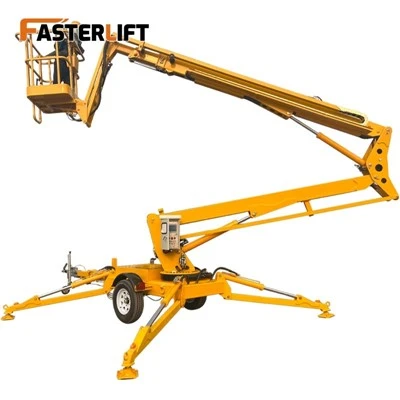
If you’re dealing with a persistent issue that you can’t resolve on-site, or you’re in the market for a new or used telescopic boom lift to reduce your downtime, reach out to my team to discuss your needs. We offer on-site service support for all the units we supply, plus training sessions for your operators to help them master basic troubleshooting and keep your jobs running on schedule.
References
Small Scissor Lift OSHA. (2023). Powered Industrial Trucks and Aerial Lifts: Safety Standards. Occupational Safety and Health Administration.
Association of Equipment Manufacturers. (2022). Telescopic Boom Lift Maintenance and Troubleshooting Guide. AEM.
International Organization for Standardization. (2021). Safety of Aerial Work Platforms: Requirements for Telescopic Boom Lifts. ISO 18878:2021.
Shandong Faster Machinery Co., Ltd.
Shandong Faster Machinery Co., Ltd. is one of the most reliable telescopic boom lift manufacturers and suppliers in China. With a professional production team, we are able to meet the needs of the majority of our customers. Please rest assured to buy advanced telescopic boom lift made in China here from our factory.
Address: No.76-4, Hainan Island Road, Qingdao, China.
E-mail: sales@fasterlift.com
WebSite: https://www.fasterlift.com/
