If you’ve ever ordered a custom wooden ring box, stared at the grain of the wood on your desk, and wondered why a brand chose one type over another, you’re not alone. As a wooden ring box supplier who’s spent the last 12 years sourcing, milling, and finishing wood for everything from proposal boxes to heirloom keepsakes, I get asked this question at least once a week. Most people assume all wood is the same—some pretty grain, maybe a scent, and done. But there’s a whole science to picking wood for a ring box: it has to be durable enough to protect a $10,000 engagement ring, stable enough not to warp if someone leaves it by a sunny window, and aesthetic enough to feel special for a moment that only happens once. Today, I’m breaking down the most common woods we use here, why we use them, and which ones might be the right fit for your next custom order. Wooden Ring Box
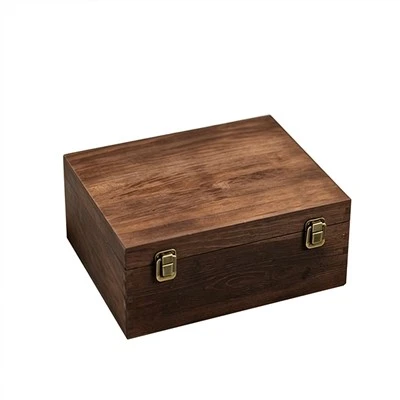
Let’s start with the non-negotiables, because not every wood is cut out for holding small, precious items. First, stability is king. A ring box sits on a countertop or shelf for decades, so it can’t expand or contract with temperature changes more than a fraction of a millimeter—otherwise the lid won’t close right, or the hinge will split. Second, density matters: soft woods like pine or cedar are too easy to scratch, and their surface wears down fast, so they’re out. We only work with hardwoods, because they’re dense, stable, and hold finishes way better than softwoods. Third, scent: no one wants a ring box that smells like fresh-cut lumber for years, so we air-dry all our wood for at least six months, sometimes a full year, to let the natural volatile oils evaporate before we even touch it. That’s why our boxes never smell like “new wood” when they arrive at a customer’s door.
The first wood we turn to, and for good reason, is walnut—specifically black walnut, the North American native. If you’ve seen a traditional wooden ring box, odds are it’s walnut. Here’s why: it’s the perfect middle ground between stable, workable, and beautiful. Black walnut grows in the eastern U.S., mostly in Ohio, Indiana, and Pennsylvania, and it’s a closed-grain wood, meaning the pores are small and tight, so it resists scratches and dents way better than something like oak. The grain is subtle, not flashy—think tight, wavy lines that get darker with age, so a box made of walnut will look even better in 10 years than it did day one. For our part, we use only sustainably harvested black walnut, sourced from mills that replant one tree for every one they take down. It’s also easy to carve, so if a customer wants a custom engraving—like a wedding date, or their initials—walnut takes that engraving crisply, no smudging. The only downside? It’s not the cheapest wood we work with, because good walnut is in demand for furniture and gun stocks, too. But for customers who want a timeless, heirloom-quality box that will last a lifetime, walnut is our top pick.
Next up is maple, and specifically hard maple (also called sugar maple). We started using maple about 8 years ago, when a customer asked for a ring box with a lighter, more neutral look, since walnut can be too dark for some modern weddings. Hard maple is super stable—one of the most stable hardwoods we use—so it’s perfect if someone lives in a climate with big temperature swings, like Minnesota or Canada, or if they plan to display their box on a windowsill. The grain of maple is straight, almost featureless if you don’t look close, but it has a natural creamy beige color that pairs with everything from silver engagement bands to platinum wedding sets. It also takes stains really well, so if a customer wants a lighter gray or a warm honey finish, maple will hold that stain evenly, no blotchy spots. We do use one trick with maple, though: we sand it extra fine before finishing, because the small grain can catch on a ring’s metal, so we make sure every surface is smooth to the touch. The only thing to watch for with maple is that it’s a little harder to engrave than walnut, since it’s so dense, but a sharp engraving bit can handle it perfectly—no chipping, no uneven lines.
If a customer wants something with a little more personality, not just straight grain or subtle waves, we turn to cherry wood—black cherry, the same as what’s used for high-end kitchen cabinets and musical instruments. Cherry is native to the eastern U.S., too, and it has a unique property that makes it popular for keepsakes: it ages. When you first cut cherry wood, it’s a pale pinkish-brown, almost like a light apple, but over the course of 6 to 12 months of being exposed to light, it deepens to a rich, deep red, like the color of a fine wine. That’s perfect for customers who want a box that has a story—you can engrave it with your wedding date, and by the time your first anniversary rolls around, it will have darkened just enough to be a gentle reminder of the day. Cherry is also stable, but it’s a little softer than walnut or maple, so scratches are easier to buff out if something does happen. It takes oil finishes really well, which makes the grain pop, and it has a mild, pleasant scent when it’s first finished—nothing overwhelming, just a warm, woody smell. We do recommend for cherry boxes that customers keep them out of direct sunlight if they want to slow down the aging process a little, but most people love the natural darkening that happens over time.
Now, let’s talk about the more unique woods we use for custom orders, because some people don’t want a box that looks like every other one. One of our most popular specialty woods is padauk, a tropical hardwood from West Africa. Padauk is bright red when it’s cut, and it stays that way, no aging required—if you want a bold, statement box that stands out, padauk is it. It’s dense, stable, and takes a high gloss finish that makes the color look almost luminous. The only downside to padauk is that it can be a little tricky to work with—its dust is fine, so we make sure our team wears masks when milling it, and it needs to be finished with a tough oil to keep the color from fading. We also never use padauk for the inner lining of the box, because some people are allergic to the natural oils in it, so we line all padauk boxes with soft suede or felt instead. For customers who are planning a destination wedding, or who want a box that feels modern and bold, padauk is a great choice.
Another specialty wood we use is walnut burl. Wait, burl is a growth on a tree, not a type of wood—think of it as a knot that forms when the tree is injured, which creates this insane, swirly, almost marbled grain. We only use burl for the top of the box, not the whole thing, because it’s super dense but also a little more fragile than solid wood. Walnut burl has these tight, curly lines that catch the light, so it looks like you polished a piece of art, not a wooden box. It’s also way more expensive than solid walnut, because burls are rare—only about 1 in 100 black walnut trees will grow a burl large enough for a box top. We work with a small mill in Oregon that harvests burls ethically, only taking ones that are from trees that have fallen or been cut for other reasons, so we never damage healthy trees for burl. If a customer wants a truly one-of-a-kind box, something that no one else will have, walnut burl is our go-to. We pair it with a solid maple base, so the burl top is the star, and the box is still stable enough to protect the ring.
I should also mention what we don’t use, because I get asked about this a lot. We never use plywood, even though it’s cheap and looks smooth from far away. Plywood is made of layers of wood glued together, so it can delaminate over time, especially if it’s exposed to moisture, and the glue can leach into the wood over years. We’ve had customers come back with plywood boxes that started falling apart after 5 years, and it’s never pretty. We also never use soft woods like cedar or pine, because they’re too soft—scratch them once, and you’ll have a mark that never comes out, and they warp way too easily. The only exception is if a customer specifically asks for a cedar-lined box for extra scent, but we always line the box with cedar, not build the whole box out of it.
A big part of being a wooden ring box supplier is listening to what the customer needs, not just pushing the most expensive wood. Last year, we had a bride who wanted a box for her vintage engagement ring, and she had a small budget, so we suggested white oak. White oak is a dense, stable hardwood, not as expensive as walnut, and it has a tight, straight grain that pairs really well with vintage styles. We finished it with a natural oil to keep it from looking too new, and she told us it was the best decision—her friends still comment on how unique the box is, and it’s held up perfectly for 3 years. We also had a groom who wanted a box for his partner, who is allergic to most scents, so we used hard maple, which has almost no natural scent, and lined it with hypoallergenic suede. That’s the stuff that matters most—matching the wood to the customer, not the other way around.
When it comes to finishing, that’s another part of the wood choice. All our boxes get a 100% natural, food-safe oil finish first, then a hand-rubbed wax topcoat. That finish protects the wood from scratches and moisture, but it also lets the natural grain show through, no thick paint or stain that hides the wood’s personality. For specialty woods like padauk, we add an extra layer of UV-protective finish to keep the color from fading, and for burl, we use a high-gloss polish to make the grain pop. No spray-on finishes here—we do everything by hand, because that’s how you get a smooth, even surface that won’t catch on a ring’s band.

At the end of the day, a wooden ring box isn’t just a place to put a ring. It’s a keepsake, something you’ll pull out on your 10th anniversary, to show your kids, to keep on your nightstand for decades. The wood you choose will be part of that story—whether it’s the subtle darkening of cherry, the timeless grain of walnut, or the bold red of padauk, it’s going to be with you for a long time. If you’re looking for a custom wooden ring box, and you want to talk through which wood is right for your needs, reach out to our team. We don’t do generic boxes, we work with you to pick the wood, the finish, the engraving, everything to make something that feels like you.
Wooden Coffe Box References
Forest Stewardship Council. (2022). Sustainable Hardwood Sourcing Standards.
National Hardwood Lumber Association. (2021). Hardwood Properties and Applications.
The Wood Database. (2023). Black Walnut, Hard Maple, Cherry, Padauk, and Walnut Burl Profiles.
Journal of Wood Science. (2020). Wood Stability for Keepsake and Luxury Goods Applications.
Shandong Pan Arts & Crafts Co., Ltd.
With abundant experience, we are one of the most professional wooden ring box manufacturers in China. We warmly welcome you to wholesale premium wooden ring box for sale here from our factory. All customized products are with high quality and competitive price.
Address: Xicheng Huijin Financial Center, located approximately 99 meters northeast of the intersection of Hechang Road and Jining Road, Huaiyin District, Jinan City, Shandong Province, China.
E-mail: pan_trade@hotmail.com
WebSite: https://www.panwoodcraft.com/
