Hey there! As a finned tube supplier, I often get asked about the heat transfer coefficient of finned tubes. So, I thought I’d take a moment to break it down and explain what it is, why it matters, and how it affects the performance of our finned tubes. Finned Tube
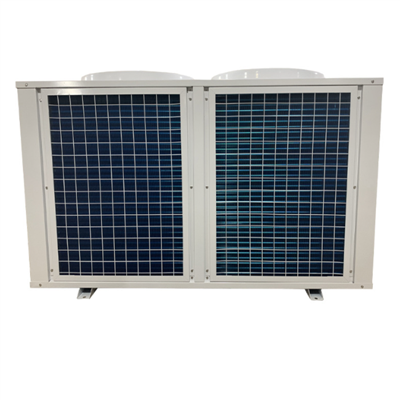
Let’s start with the basics. The heat transfer coefficient, usually denoted as ‘h’, is a measure of how well a surface can transfer heat between two fluids. In the context of finned tubes, it tells us how efficiently heat can be transferred from the fluid inside the tube to the fluid outside the tube, or vice versa. It’s measured in units of watts per square meter per degree Celsius (W/(m²·K)).
Now, you might be wondering why we even care about the heat transfer coefficient. Well, a higher heat transfer coefficient means that more heat can be transferred in a given amount of time. This is crucial in many applications, such as in heat exchangers used in HVAC systems, power plants, and chemical processing industries. The more efficient the heat transfer, the smaller and more cost – effective the heat exchanger can be.
Factors Affecting the Heat Transfer Coefficient of Finned Tubes
There are several factors that can influence the heat transfer coefficient of finned tubes.
1. Fin Design
The design of the fins plays a huge role. The shape, size, and spacing of the fins all matter. For example, a fin with a larger surface area will generally have a higher heat transfer coefficient because there’s more area available for heat transfer. Pin – fins, which are small, cylindrical fins, can provide a large surface area in a relatively small space. On the other hand, the spacing between the fins also needs to be optimized. If the fins are too close together, the fluid flow around the fins can be restricted, which can actually reduce the heat transfer rate.
2. Fluid Properties
The properties of the fluids involved in the heat transfer process are also important. Things like the fluid’s thermal conductivity, density, viscosity, and specific heat all affect how easily heat can be transferred. For instance, a fluid with high thermal conductivity will transfer heat more readily, leading to a higher heat transfer coefficient. Water, for example, has a relatively high thermal conductivity compared to air, so heat transfer between a fluid inside the tube and water outside the tube will generally be more efficient than with air.
3. Flow Conditions
The way the fluids flow around the finned tube is another key factor. Turbulent flow generally results in a higher heat transfer coefficient than laminar flow. When the fluid is flowing turbulently, there’s more mixing, which helps to move the heated or cooled fluid away from the surface of the finned tube more quickly. This allows for a greater temperature difference between the fluid and the tube surface, driving more heat transfer. We can often increase the flow velocity to promote turbulent flow, but we also have to be careful not to increase it too much, as this can lead to higher pressure drops and increased energy consumption.
Calculating the Heat Transfer Coefficient
Calculating the heat transfer coefficient for finned tubes isn’t a straightforward task. There are a few different methods that can be used.
One common approach is to use empirical correlations. These are equations that have been developed based on experimental data. For example, there are correlations for different types of fin geometries, such as plate fins or helical fins. These correlations take into account the factors we mentioned earlier, like fin design, fluid properties, and flow conditions.
Another way is to use computational fluid dynamics (CFD) simulations. With CFD, we can create a virtual model of the finned tube and the fluid flow around it. The software then solves the equations governing fluid flow and heat transfer to calculate the heat transfer coefficient. This method is more accurate and can handle complex geometries and flow conditions, but it also requires more computational resources and expertise.
Importance of a Good Heat Transfer Coefficient for Our Finned Tubes
As a finned tube supplier, we know how important it is to have a high heat transfer coefficient for our products. When our customers are looking for finned tubes, they’re often looking to improve the efficiency of their heat transfer systems. A high – performance finned tube with a good heat transfer coefficient can help them achieve that.
For example, in a power plant’s condenser, a finned tube with a high heat transfer coefficient can transfer more heat from the steam inside the tube to the cooling water outside the tube. This allows the steam to condense more quickly, which in turn improves the efficiency of the power generation process.
In an HVAC system, a finned tube with a high heat transfer coefficient can transfer heat more effectively between the refrigerant and the air. This means that the system can cool or heat a space more quickly and use less energy in the process.
How We Ensure High Heat Transfer Coefficients in Our Finned Tubes
At our company, we take several steps to ensure that our finned tubes have high heat transfer coefficients.
First of all, we use advanced fin manufacturing techniques. We can produce fins with precise geometries and smooth surfaces, which helps to maximize the surface area available for heat transfer and reduce any resistance to fluid flow.
We also conduct extensive testing on our finned tubes. We measure the heat transfer coefficient under different operating conditions to make sure that our products meet or exceed industry standards. This allows us to fine – tune our manufacturing processes and improve the performance of our finned tubes over time.
In addition, we work closely with our customers to understand their specific needs and applications. We can then recommend the best finned tube design and materials for their particular situation, ensuring that they get the most efficient heat transfer possible.
Conclusion
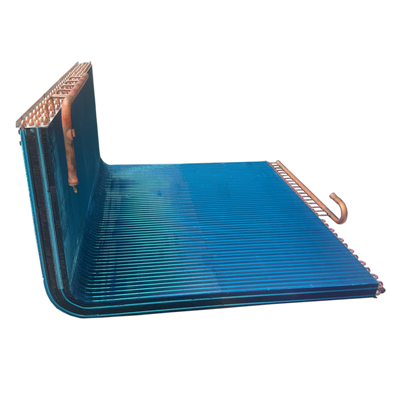
So, in a nutshell, the heat transfer coefficient of a finned tube is a crucial parameter that determines how well the tube can transfer heat between two fluids. It’s affected by factors like fin design, fluid properties, and flow conditions. As a finned tube supplier, we’re constantly working to improve the heat transfer coefficients of our products to help our customers achieve more efficient heat transfer in their systems.
Finned Tube If you’re in the market for finned tubes and want to learn more about how our products can meet your heat transfer needs, don’t hesitate to reach out. We’re here to help you find the best solution for your application. Whether you’re in the HVAC industry, power generation, or chemical processing, we’ve got the expertise and the products to make your heat transfer systems more efficient. Let’s start a conversation about how we can work together to improve your operations.
References
- Incropera, F. P., DeWitt, D. P., Bergman, T. L., & Lavine, A. S. Fundamentals of Heat and Mass Transfer.
- Kays, W. M., & London, A. L. Compact Heat Exchangers.
Xiangshui Derkang Refrigeration Equipment Co., Ltd.
As one of the most professional finned tube manufacturers in China, we’re featured by quality products and low price. If you’re going to buy discount finned tube, welcome to get quotation from our factory. We also accept customized orders.
Address: No. 2, Xiaojian Town Entrepreneurship Park, Xiangshui County
E-mail: 505745223@qq.com
WebSite: https://www.xsderk.com/
